Illinois commercial property managers evaluating roofing options confront a complex decision between three dominant single-ply membranes. EPDM, TPO, and PVC each deliver distinct performance characteristics, cost structures, and climate adaptability for the state's challenging weather conditions. Selecting the optimal material requires understanding upfront costs, expected lifespans, and how each system responds to Illinois's frequent freeze-thaw cycles and temperature extremes.
The choice between these materials directly impacts facility operating costs, maintenance schedules, and long-term asset value. Illinois properties face unique demands from over 100 annual freeze-thaw cycles that test membrane flexibility and seam integrity. This analysis provides facility managers with data-driven criteria for material selection, repair versus replacement thresholds, and lifecycle cost optimization strategies.
Key Takeaways
- TPO costs $4.00-$10.00 per square foot with a 15-20 year lifespan, while EPDM costs $5.00-$10.00 with a 25-30 years
- EPDM demonstrates superior freeze-thaw resilience for Illinois's 100+ annual freeze-thaw cycles
- Repair becomes optimal when damage affects less than 20% of the roof area and costs under 30% of the replacement cost
- PVC offers premium chemical resistance at $7.00-$12.00 per square foot with 20+ year durability
- Annual maintenance costs exceeding $2.00 per square foot signal replacement is more cost-effective than continued repairs
What Are EPDM, TPO, and PVC Roofing Materials?
These three single-ply membranes dominate commercial flat roofing installations across North America and Illinois specifically. Each material represents a distinct chemical composition and manufacturing process that determines its performance characteristics. Understanding the fundamental differences between EPDM roofing Illinois systems, TPO options, and PVC membranes establishes the foundation for informed material selection.
What Defines EPDM Roofing?
EPDM is a synthetic rubber membrane manufactured from ethylene and propylene combined with diene monomers. This thermoset material delivers exceptional flexibility in extreme temperatures ranging from -40°F to 300°F. EPDM membranes typically come in black or white colors with thicknesses of 45-mil, 60-mil, or 90-mil. The material maintains elasticity through decades of thermal cycling without brittleness or cracking.
What Defines TPO Roofing?
TPO is a blend of polypropylene and ethylene-propylene rubber that forms a thermoplastic membrane. The material features heat-welded seams that create monolithic waterproofing superior to adhesive-bonded systems. TPO membranes are manufactured primarily in white reflective colors with standard thicknesses of 45-mil, 60-mil, and 80-mil. The thermoplastic composition allows seams to be re-welded if repairs become necessary during the roof's service life.
What Defines PVC Roofing?
PVC is a premium single-ply membrane known for its exceptional chemical resistance and heat-welded seams. The material contains plasticizers that maintain flexibility while delivering superior resistance to grease, oils, and chemicals. PVC membranes feature heat-welded seams identical to TPO but with enhanced durability and longer service life. Standard thicknesses include 45-mil, 60-mil, and 80-mil, with white being the predominant color option.
How Do EPDM, TPO, and PVC Differ in Key Performance Aspects?
Performance characteristics separate these three materials across cost, durability, energy efficiency, and maintenance requirements. The TPO roofing comparison against EPDM and PVC reveals significant variations in lifecycle value despite similar installation methods. Material selection for flat roofs requires analyzing both immediate costs and long-term performance metrics specific to Illinois conditions.
How Do Costs and Lifespans Compare?
TPO installations cost $4.00-$10.00 per square foot with expected lifespans of 15-20 years in Illinois conditions. PVC systems require $7.00-$12.00 per square foot but deliver 20+ years of reliable performance with proper maintenance. EPDM installations range from $5.00-$10.00 per square foot while providing 25-30 years of service life. These figures translate to annual costs of $0.27-$0.67 for TPO, $0.35-$0.60 for PVC, and $0.17-$0.40 for EPDM when calculated over expected lifespans.
What Are the Durability and Climate Suitability Differences?
EPDM demonstrates superior performance in freeze-thaw cycling due to its rubber composition that remains flexible below zero. TPO membranes provide excellent UV resistance, but seams may weaken during repeated thermal expansion and contraction cycles. PVC delivers exceptional puncture resistance and chemical durability, but can become brittle when temperatures drop below -20°F. Illinois properties experience temperature ranges from -20°F winter lows to 95°F summer highs, requiring materials that maintain integrity across this spectrum.
How Do Energy Efficiency and Maintenance Requirements Vary?
White TPO and PVC membranes reflect 70-80% of solar radiation, significantly reducing cooling costs compared to black EPDM. EPDM requires minimal maintenance due to its monolithic rubber composition, but absorbs heat that increases HVAC demands. TPO systems need annual seam inspections to identify weakening before leaks develop, particularly after severe weather. PVC membranes demand the least maintenance among all three options due to superior seam strength and chemical resistance.
What Factors Influence Commercial Roofing Choices in Illinois?
Illinois presents unique climate challenges and building stock characteristics that influence flat roof material selection substantially. Regional weather patterns, building types, and decision-maker priorities create a distinct market environment compared to other states. Understanding these factors explains why roofing materials for the Illinois climate must prioritize freeze-thaw resilience and thermal cycling performance.
How Do Illinois Climate and Building Types Affect Material Selection?
Illinois experiences over 100 freeze-thaw cycles annually that cause membrane expansion and contraction stresses. The state's building stock includes aging industrial facilities, modern office towers, and expanding suburban distribution centers requiring diverse solutions. The Chicago metropolitan area accounts for 80% of commercial roofing demand, with concentrated activity on flat-roofed office buildings. Suburban warehouses and manufacturing facilities prioritize long-term durability over aesthetic considerations when selecting materials.
Who Are the Decision-Makers and What Are Their Priorities?
There were 131,400 facilities managers in the U.S. in 2023, responsible for commercial building maintenance and capital improvements. Median annual wage of $102,340 for facilities managers reflects their professional expertise in evaluating technical specifications. Illinois employs 7,310 facilities managers with a location quotient of 1.40, indicating high concentration in the state. Decision factors ranked by importance include: Cost 28%, Durability and Lifespan 22%, Energy Efficiency 18%, Installation Time 15%, Climate Suitability 10%, and Aesthetics and Compliance 7%.
How Does Regional Market Demand Shape Roofing Preferences?
TPO holds 37% of the single-ply membrane market share, driven by cost-effectiveness and reflective properties for energy savings. PVC has 28% market share concentrated in facilities with chemical exposure, like restaurants and manufacturing plants. EPDM holds 24% market share with a strong preference in cold climates requiring freeze-thaw resilience. Urban markets account for 60% of demand, where LEED certification and cool roof standards drive TPO and PVC adoption. The Midwest shows 28% preference for EPDM compared to the national average due to superior cold-weather performance.
When Should Illinois Property Managers Repair or Replace Roofs?
Financial thresholds determine whether repair or replacement delivers superior return on investment for aging commercial roofs. Understanding when to repair or replace roofs prevents premature capital expenditure while avoiding costly emergency situations. This framework provides quantitative criteria based on roof age, damage extent, and cumulative maintenance costs.
What Are the Cost and Lifespan Thresholds for Repairs?
Repair is optimal when the roof is less than 50% of its expected lifespan, such as under 10 years for TPO. Repair is optimal when damage is localized to less than 20% of the total roof area, allowing targeted intervention. Repair is optimal when total repair costs are less than 25-30% of full replacement cost, ensuring positive ROI. Commercial roof repairs range from $3.00 to $7.00 per square foot, depending on membrane type and damage severity.
When Is Full Roof Replacement More Beneficial?
Replacement is optimal when the roof has exceeded 75% of its expected lifespan, as failure risk accelerates exponentially. Replacement is optimal when cumulative repair costs approach 50-60% of replacement cost, indicating diminishing returns on continued maintenance. Replacement is optimal when annual maintenance exceeds $2.00 per square foot, signaling systemic deterioration rather than isolated issues. Full commercial roof replacements range from $7.00 to $15.00+ per square foot, providing 15-30 years of new service life.
How Does Maintenance Impact Roof Longevity?
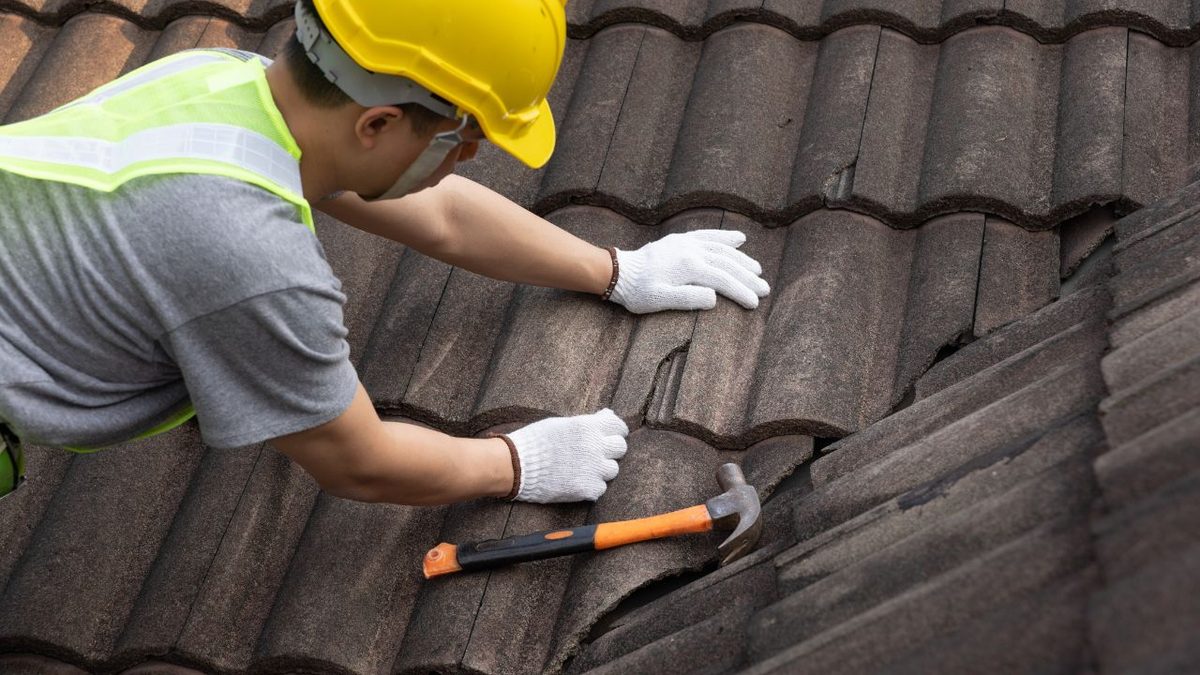
Bi-annual inspections in Spring and Fall identify minor issues before they escalate into major failures. Proactive maintenance extends single-ply membrane life by up to 25% compared to reactive-only approaches. Documented maintenance history significantly influences warranty claims and insurance adjusters' evaluations after storm damage. Commercial roof maintenance plans should include drainage clearing, seam inspection, and puncture repair protocols.
What Are Alternative Commercial Roofing Materials?
Standing seam metal and modified bitumen represent viable alternatives to single-ply membranes for specific applications. These materials offer distinct advantages in longevity and durability despite higher installation costs or labor requirements. Understanding when metal or modified bitumen outperforms EPDM, TPO, or PVC ensures optimal material specification for each project.
How Does Standing Seam Metal Roofing Compare?
Standing seam metal roofing offers premium durability with lifespans ranging from 40 to 70+ years, depending on coating systems. Metal costs $10.00-$18.00 per square foot installed, representing the highest upfront investment among commercial roofing options. Metal roofing has potential noise during precipitation that requires acoustic insulation in occupied spaces below. Metal roofing has high upfront costs but delivers the lowest annual cost at $0.14-$0.45 per year of service life.
What Are the Characteristics of Modified Bitumen Roofs?
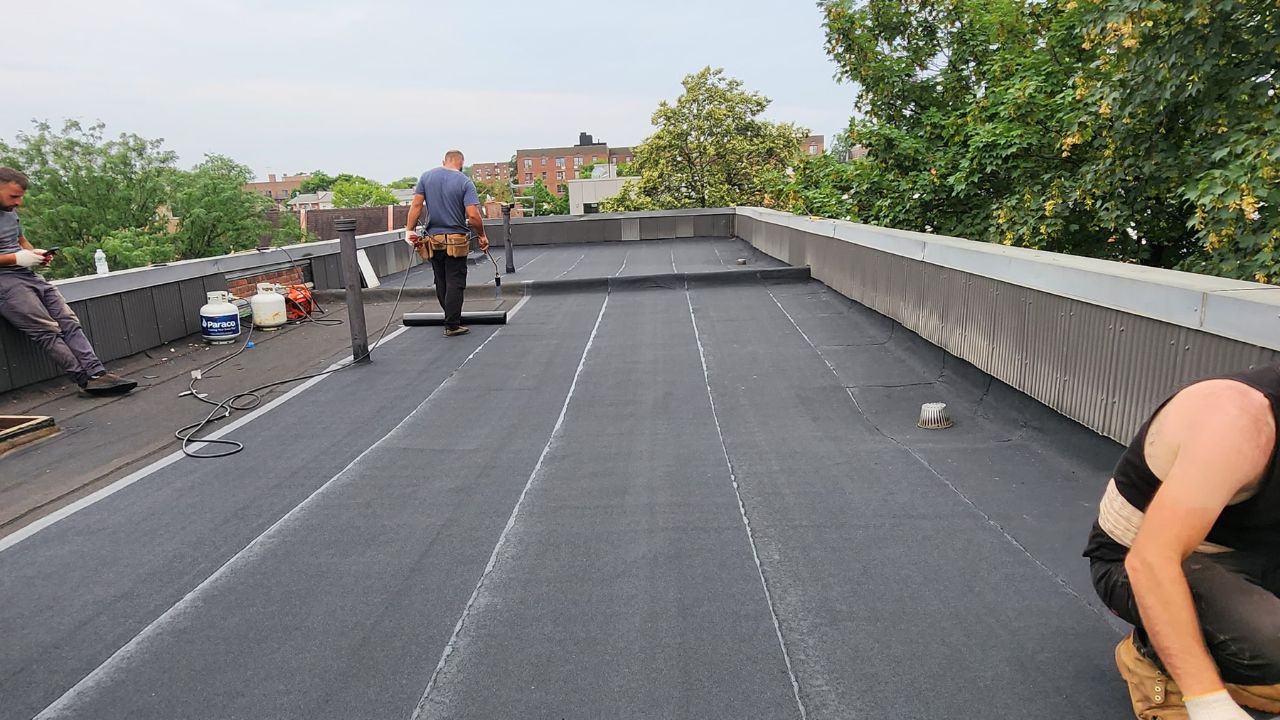
Modified bitumen consists of asphalt enhanced with polymers installed in multiple overlapping layers for redundancy. Modified Bitumen costs $4.00-$8.00 per square foot installed with expected lifespans of 15-20 years in Illinois conditions. Modified bitumen requires regular maintenance to prevent seam degradation from thermal cycling and UV exposure. Modified bitumen requires labor-intensive installation using torch-applied, cold-adhesive, or self-adhering methods depending on substrate conditions.
How Do EPDM, TPO, and PVC Perform Specifically in Illinois Conditions?
Illinois's extreme temperature swings and freeze-thaw cycles create unique performance demands for commercial roofing membranes. EPDM versus TPO comparison reveals significant differences in cold-weather flexibility and seam performance. Each material demonstrates specific advantages and limitations when subjected to Midwest weather patterns.
Why Is EPDM Recommended for Freeze-Thaw Resilience?
EPDM maintains elasticity at temperatures as low as -40°F without brittleness or cracking under stress. The rubber composition flexes during thermal expansion and contraction, preventing membrane cracking common in rigid materials. EPDM is susceptible to punctures from foot traffic, requiring walkway pads in high-traffic areas. EPDM is typically black, visually unappealing, and absorbs heat, increasing cooling costs by 10-15% compared to white membranes. EPDM relies on adhesives for seams rather than heat welding, creating potential failure points during freeze-thaw cycles.
What Are TPO's Advantages and Limitations in Illinois?
TPO's white reflective surface reduces cooling costs by 20-30% compared to black EPDM in Illinois summers. Heat-welded seams create monolithic waterproofing that outperforms adhesive-bonded systems when properly installed and maintained. TPO can perform poorly in extreme heat above 180°F, causing premature aging and reduced membrane flexibility. TPO seams may weaken if improperly welded during installation, requiring rigorous contractor certification and quality control. TPO is typically available only in a white reflective surface, limiting aesthetic options for visible roofs. Ensure a minimum thickness of 60-mil for TPO in Illinois to provide adequate durability against thermal cycling. Mandate rigorous annual seam inspections for TPO to identify early deterioration before leaks develop.
Is PVC Suitable Despite Cold Temperatures?
Modern PVC formulations include plasticizers that maintain flexibility down to -20°F, making them suitable for most Illinois winters. The PVC commercial roofing benefits include superior chemical resistance, ideal for restaurants, hospitals, and manufacturing facilities with roof equipment. Heat-welded PVC seams demonstrate greater long-term strength than TPO seams due to enhanced polymer formulation. PVC can become brittle in extreme cold temperatures below -20°F that occasionally occur during severe Arctic outbreaks. PVC has a higher upfront cost compared to TPO and EPDM but delivers longer service life, offsetting the initial investment.
How Do Lifecycle Costs Affect Material Value Assessment?
Total cost of ownership includes installation, maintenance, energy consumption, and replacement timing over the building's holding period. Lifecycle analysis reveals materials with higher upfront costs often deliver superior value through extended service life and reduced maintenance. Commercial roof management best practices emphasize total cost evaluation rather than focusing solely on initial capital expenditure.
What Is the Cost per Year of Each Roofing Material?
Cost per year calculations divide the total installed cost by expected service life to reveal true material value. TPO delivers $0.27-$0.67 annual cost, making it attractive for properties with 10-15 year holding periods. EPDM provides a $0.17-$0.40 annual cost, representing the best value among single-ply membranes for long-term holds. PVC costs $0.35-$0.60 annually, justified by chemical resistance and minimal maintenance requirements. Metal roofing achieves a $0.14-$0.45 annual cost, delivering the lowest lifecycle expense despite the highest upfront investment. Modified Bitumen ranges from $0.20-$0.53 annually, positioning it between TPO and EPDM in value analysis.
How Do Energy Savings Influence Overall Value?
White TPO and PVC membranes reduce cooling costs by 10-15% compared to black EPDM in the Illinois climate. Energy savings of $0.10-$0.20 per square foot annually significantly shorten payback periods for reflective membrane upgrades. LEED certification requirements often mandate cool roof systems, driving specifications toward white TPO or PVC membranes. Utility rebates for cool roof installations in the Chicago area can offset 5-10% of material costs, improving project ROI.
How Should Facility Managers Balance Upfront Cost with Long-Term Benefits?
Properties with 20+ year holding periods should prioritize lifecycle cost over initial installation expense, favoring EPDM or metal. Short-term holds under 10 years benefit from a lower-cost TPO that matches the ownership timeline without over-investing. Chemical exposure from kitchen exhaust or manufacturing processes justifies PVC's premium cost through reduced maintenance and longer lifespan. Budget constraints may necessitate TPO selection but require 60-mil thickness and annual seam inspections to achieve acceptable performance.
Synthesis of Suitability and Strategic Recommendations for Illinois Commercial Roofing
Material selection requires balancing upfront costs, expected service life, climate suitability, and facility-specific requirements comprehensively. EPDM delivers exceptional freeze-thaw performance and the lowest annual cost for long-term property holdings in Illinois conditions. TPO provides cost-effective solutions with energy-saving reflectivity ideal for budget-conscious projects with proper installation oversight. PVC represents the premium choice for facilities requiring chemical resistance and minimal maintenance despite a higher initial investment. Fall roofing material considerations emphasize selecting materials that withstand Illinois's seasonal temperature extremes and precipitation patterns.
The 30/50 repair-versus-replacement rule provides clear financial thresholds: roofs exceeding 50% of expected lifespan with repair costs above 30% of replacement cost should be replaced immediately. Illinois facilities should mandate bi-annual inspections to identify minor issues before they escalate into expensive emergency repairs. Proactive maintenance extends membrane service life by 25% while preserving warranty coverage and reducing total ownership costs. Energy efficiency considerations increasingly drive specification decisions as utility costs rise and LEED certification becomes standard for Class A properties.
Understanding the technical characteristics and performance data for EPDM roofing systems enables informed discussions with contractors and accurate project specifications. Facility managers must evaluate contractor certifications, particularly GAF Master Elite or CertainTeed ShingleMaster credentials that validate technical expertise. Illinois's challenging climate demands contractor experience with local weather patterns and proper installation techniques for freeze-thaw resilience.
Advanced Roofing Inc. has served Illinois commercial properties for over 30 years with expertise in all three single-ply membrane systems. Our team evaluates each facility's unique requirements to recommend materials that optimize lifecycle value rather than minimizing upfront costs. GAF Master Elite certification and CertainTeed ShingleMaster credentials ensure our installations meet manufacturer specifications for full warranty coverage.
Get Expert Commercial Roofing Guidance for Your Illinois Property
Choosing between EPDM, TPO, and PVC affects your facility's operating costs for decades. Advanced Roofing Inc. has helped Chicagoland property managers make this decision since 1994, matching the right single-ply membrane to each building's climate exposure, budget, and maintenance demands.
Our team installs and maintains all three systems across the Fox Valley and greater Chicagoland area. As a GAF Master Elite® and CertainTeed ShingleMaster™ contractor with a BBB A+ rating, we back every commercial project with documentation, warranty support, and a maintenance plan built for Illinois freeze-thaw conditions. Schedule a free roof assessment and get a written recommendation based on your property's specific needs.